
Cleveland’s housing stock is old — the median home was built in 1941, and roughly half the city’s homes predate 1940. That makes it, on average, the oldest housing we work on anywhere in our service area, older even than Cleveland Heights or Shaker Heights. Lots run narrow: zoning allows AA districts down to 7,200 sq ft and B/C districts to 4,800 sq ft, with 40-foot-wide lots common in older neighborhoods like Ohio City, Tremont, and West Park — a tighter footprint than the suburban lots most landscapers are used to.
The city is also large and genuinely varied — Detroit-Shoreway, Old Brooklyn, and Collinwood each have their own housing character, and we won’t pretend one page can speak to every block the way it can for a smaller suburb. What’s true citywide is the soil and the drainage: Cleveland sits on dense glacial clay with only 10–50% drainage capacity, versus 80–90% for sandier soil elsewhere in the county. Even a modest 1–2 inch rain can cause basement flooding on a poorly-graded lot, and it’s the single biggest reason a Cleveland yard needs different handling than one in Solon or Beachwood.
Tree canopy is the other outlier: at 17.9–19.2%, Cleveland has the lowest canopy of any city we serve, well below the county average, and it’s been the subject of active reforestation advocacy (the Cleveland Tree Plan, Western Reserve Land Conservancy’s “Reforest Our City” campaign) precisely because the deficit is real and citywide.
Landscaping Challenges in Cleveland
Here’s the detail most Cleveland homeowners don’t know: the city’s Leaf Removal Program is targeted, not citywide. It only covers “designated high-generation areas” — neighborhoods with the highest concentration of city-owned tree-lawn trees — serviced a minimum of twice within an 8-week window starting in early November. If your block isn’t in one of those zones, your only city-provided option is bagging up to 20 bags with regular trash. That’s a real gap the suburbs simply don’t have, since Beachwood, Cleveland Heights, and Shaker Heights all run universal leaf collection.
Yard waste otherwise goes out weekly, bagged, with brush bundled to 3 feet long and 2 feet wide. Any tree-lawn planting requires a permit and an 811/OUPS utility locate under the city’s Tree Planting Ordinance (Codified Ord. §509.13) before you dig — easy to miss if you’re used to a suburb with looser rules. Combined with the clay soil’s poor drainage, the most common calls we get in Cleveland are less about growing things and more about managing water and debris that the city’s own infrastructure doesn’t fully cover.
Our Services in Cleveland
Given the targeted (not citywide) leaf program and heavy clay soil, these three come up most:
- Spring & Fall Cleanups — the direct fix for neighborhoods outside the city’s targeted leaf-collection zones.
- Mowing & Edging — routine upkeep for narrower urban lots that still need regular care.
- Garden Bed Creation — grading and bed work suited to clay-heavy soil and older, established properties.
We also handle the rest of what a Cleveland property needs across the season:
- Weed Control
- Lawn Care Programs
- Mulching
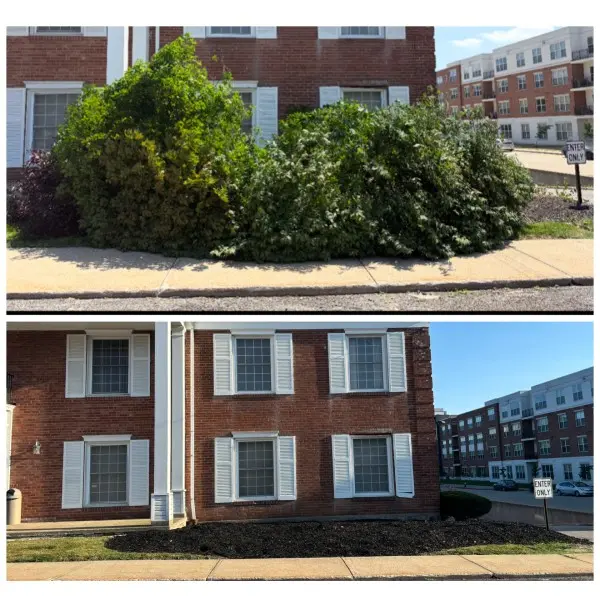
- Hedge & Tree Trimming
- Aeration, Dethatching & Overseeding
- Planting Services
- Lawn Installation, Sod & Hydroseeding
- Landscape Design
- Fire Pits
Nearby Areas We Serve
We also serve the surrounding inner-ring suburbs: Cleveland Heights, Shaker Heights, and South Euclid.
“Very detailing and gets the job done right the first time every time.”
Ready to get started in Cleveland? Get a free quote — call 216-440-5449 or use our contact form.